 It seems to have been the week for conversations around some great positive changes that various of my clients are embarking on.
“Oh wow. I’ve only gone and been offered the post! Ahhhhhhhh eeeeeeeee so many emotions!! Excited and terrified, super happy but completely overwhelmed!!” was one of the emails I was very happy to receive.
This can be one of the many challenges of change. Even when we proactively try out new behaviours, explore new directions and make changes, it’s completely natural to feel scared about the consequences of our actions and our new responsibilities.
It’s all part of the process.

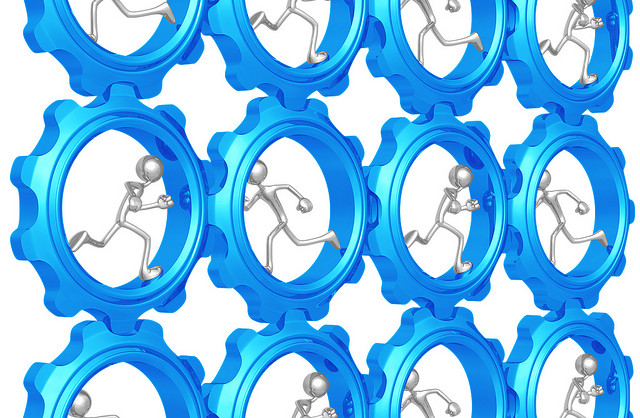
image from http://www.lumaxart.com/
We can be very busy without being productive (I can always be busy, dealing with emails, checking out twitter, attending meetings, doing a bit of networking). But does this mean I am being productive? The more important question to ask is what’s the value of my activities?
One of my on-going concerns is how we apply measures of “productivity” and “effectiveness” in the world of the knowledge worker who has moved out of the mode of assembly worker in an industrial manufacturing context. Let’s face it, the industrial age is where most of our time management, performance management, effectiveness indices, output matrices etc etc originated and seem to be stuck.
They are often perpetuated in out of date job descriptions which enumerate tasks and activities to be done, rather than the value that is required. For example, where I to commission a tele-marketer sales team to generate interest in my offerings, would I want to just measure the number of calls made; or additional participants signed up for a programme? 100 calls to the wrong people, or done in the wrong way, would have been busy work. But the end result would be added (and wasted) cost not added value.
There’s the old story that still makes a great point, of the engineer called in to fix the boiler (back in the days before computers etc). The business owner was purple with rage because all production had stopped. The engineer solemnly walked around the boiler, listened, watched … got out his hammer and tapped at a certain point. And voila … all was well.
The business owner was delighted – until he saw the bill the engineer gave him which said ‘Invoice: Fix boiler £500′. “What?” he cried, “But you only hit it with a hammer and it started working again. That’s an outrageous bill.” So the engineer took back the invoice, tore it up, and wrote a new one. ‘Hitting boiler with hammer £1. Knowing where to hit £499′.
I ask people to look at the value they provide by their performance of their job tasks and activities. We must redefine “go the extra mile” as working smarter, not harder. This can be by stopping doing things that don’t add value. Or finding better ways of doing the things that are important.
Above all, like the engineer, take the time to look, listen, and reflect rather than rushing into busy action. Does it need to be done? If so, does it need to be done by me? Does it need to be done now? If I do it now, what will I have to not do? Can it be done in a better way?
Your productivity is about the value of your actions. Quality, not quantity.
(image attribution: http://www.lumaxart.com/)
Cassandra and Troy
Cassandra foresaw the destruction of Troy by the Greeks; when the Trojans found the big wooden horse outside the gates of their city Cassandra told them that Greeks will destroy them if they bring the horse in the city. … No one in Troy believed her, and the horse was admitted in the city, with the known results for Troy….
The Cassandra Syndrome
Based on the myth of Cassandra there is a modern syndrome and metaphor recognized by experts; the Cassandra syndrome or complex, which is applied in cases of valid alarms which are disbelieved. The syndrome applies mostly in psychology and politics or science, and it was named by the French Philosopher Gaston Bachelard in 1949.
Source: http://www.greekmyths-greekmythology.com/the-myth-of-cassandra/
A quick search on google with the term “Positive Psychology” brings up up over 20 million hits (though it wouldn’t make me happy to trawl through them, nor the 380 million plus hits for “Happiness”).
So I find myself with a dilemma in my role in personal and professional development training. If personal and professional development is to be effective and useful, it has to help prepare us for an uncertain future. So my role has to include challenging the comfort blanket of complacency and stability. Yet for some this is seen as being overly pessimistic, de-motivating, and counter-productive. So do I stick to the “happy” agenda in service to feedback “happy sheets”; or do I stick to my guns and say it as it is? In one-to-one coaching this is easier. But with groups the creative tension is always there.
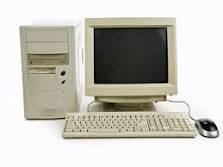
Your CV is a lot like the computer you wrote it on: it was probably fit for purpose at the time, but would have been out of date within a year. Because the world of business is so rapidly changing, your CV, just like your technology, needs to be upgraded regularly in order to meet its newest demands. And if the basic model is too old-fashioned to cope with the upgrades, it’s best to throw it out and get a new one, with all the latest new-fangled additions.
Making the decision to have a radical CV overhaul is the easy part. Knowing where to start is slightly more difficult. Do you begin with the skills you most recently attained, or with your fifteen-year-old exam grades?
The answer is: neither. Because before you rebound into writing your next CV, you are going to create a personal Career Data Bank. This stockpile of skills will act as a stepping stone between CVs, which you can add to as your career and CV requirements change.
Making a Career Data Bank
On a piece of paper, (or on your ipad or tablet or whatever) begin a brainstorm, in whichever format you like. Scribble down, using your last CV only as a reminder, the:
- skills
- attitudes
- knowledge
that you have acquired or used at work and at home.
With each skill you note down, remember to include examples of its use, and the results this use yielded. What value did you add? Be indiscriminate. Throw anything down that you think a prospective employer (and prospective employer) may find relevant.
When the time comes to apply for new jobs, this will be your one-stop-shop for CV renovations. From your Career Data Bank, you will be able to pick and mix from your collected skills, attitudes and knowledge in order to create a focussed profile that will match the job’s candidate specifications.
Do this now, even if you’re not looking for a new job. If you do, it will be much quicker to create focussed CVs in the future – and speedy CVs are vital if you stumble across a job opportunity close to the closing date.
Have you requested your personal development training for 2014?
 Judging from the number of cranes on the London skyline, the economy is starting to take off again. And I’m told that while pay rises and bonuses might still be a way away, budgets for training are back on the table. So what are you waiting for? Your annual appraisal? No, take action now, show that you’re proactive, don’t wait to be offered.
If you leave it to chance, and wait until later, you may lose out to those who got in first: budgets will have been allocated and funds already spent.
Getting started: making the business case
You need to able to make the case for the personal development you want. How will it improve your performance – now or in the future? How does it tie in with delivering your performance objectives? What benefit will it bring the company? How will it help you add value to the bottom line? Want some help in making your business case? Send us an email to receive your free Personal Development Business Case planning template.
Think outside of the box
Personal development is not just about going on a training course. If you want to improve your project management skills, you could ask to shadow or contribute to a current project – or find a senior project manager to act as your mentor. Look online for webinars, MOOCs (google MOOCS is you don’t know what they are!); join a professional networking group; and read, read, read. Watch TED lectures on your commuter instead of playing Candy Crush Saga. Get curious. Get involved. Get motivated.
Remember, if you don’t ask, you don’t get.

Within organisations and across your industry, you’ll find that a key advantage you can make use of is WHO you know, not just WHAT you know. Social and media and networking are of course buzz words that we see everywhere.
But how can you really tell who’s who within the the Cultural Network? And how can you use this knowledge to your advantage?
- Become aware of and use the hidden and informal hierarchy of the cultural network
- Recognise the network’s existence and importance
- Become part of it by cultivating your own network of appropriate contacts – especially among the Storytellers and Priests/Priestesses
- Treat each person you come in contact with as if they were the CEO or chairman of the board: they may turn out to be a high priest/priestess in the cultural network
- Ask people you meet to explain what you have seen. Ask them about history – why it’s like this. If you get anecdotes you have probably found a storyteller. If you get eloquent historical description and detail you may have found a priest/priestess
- Ask every contact for names of others to talk to. Eventually the same names will crop up and you will probably have identified your storytellers
- Cultivate a special relationships with the storytellers and priests/priestesses. Be nice to them and give them time to do their job, which is to carry news and interpret events. If things happen you can’t explain, ask them (you’ll get their insight, and they’ll probably be hurt if you don’t)
- Always find time to pass the time of day
- Put yourself in situations where a story about you could emerge
- Seek out and maintain friends for support, they are the stuff of the cultural network
Rely on the network for the bulk of your communications and your insights into what’s really going on. It will save a lot of emails and will be a lot more effective.
It’s the holiday season. Which for most of us means a mad dash to clear the inbox and finish the to-do list at work, and at home. And we deep down wonder how we will really be able to switch off, knowing that the inbox will be filling up again behind us. So perhaps, after all, we’ll take our smart-phone, ipad or laptop away with us, so that we can “keep on top” of things while we are away.
Actually, this is a decision that faces us everyday, not just when we are about to take the annual vacation.
Too many interruptions – but what can I do?
Here are a few articles which show how today’s technology and lifestyle changes can reduce your productivity and efficiency if you do not take control.
Are you constantly checking email, facebook, iphone?
Nowadays this behaviour is accepted both at work and in our personal lives. In reality, it means that you are not giving quality time to either your friends & family nor giving adequate time to the work issues arising.
It is proven that not managing office distractions (such as email overload) have been linked to:-
- reduced productivity
- inability to focus on important tasks
- factual mistakes
- poor judgement
- frustration and unhappiness in your work
- and even physical and emotional stress
But what can I do about this?
1. You could start by defining the boundaries – when will you allow your work life to encroach on your personal life?
2. Look at how you are “categorising your day” so that you create the sameboundaries during your working day
There is no one-size fits-all answer – the way of finding commitment and fulfillment in your work and professional life is personal to you.
Does this touch a raw nerve?
Do you want to think about this more?
Anita Bruzzese is a syndicated columnist for Gannett/USA Today and has written a short article with it’s own memorable acronym – PACE – to help you become more effective and productive with your work/home life balance. Read more here.
Still interested in reading more, here are some other interesting articles:-
“He that rises late must trot all day.“ -– Benjamin Franklin
“The clock is running. Make the most of today. Time waits for no man. Yesterdayis history. Tomorrow is a mystery. Today is a gift. That’s why it is called the present.” – Alice Morse Earle, American Historian and Writer
“Take the tools in hand and carve your own best life.” — Douglas Lurton

OPV on sugar, Wellcome Library, London
Back in the ‘old days’ we’d be given our polio vaccinations on a lump of sugar. It was an effective way of vaccinating millions of vulnerable children. As a ‘reward’ for going to the dentist – we might be given a lollipop or a sweet/candy. Today, it would have to be a sugar-free, cavity-filling lollipop for the dentist not to be regarded cynically as just trying to ensure ongoing job security. And most parents have got the message that a quick prick of the needle to provide cover from potentially life-threatening illnesses is a positive trade-off.
Amid accusations of parts of the NHS lacking compassion, Tom Shakespeare in a recent article on the BBC website “How important is compassion in healthcare?” wonders if there can be too much emphasis on empathy.
The article is well-written and logically argued – and reinforces my viewpoint that we need to strive for balance, both within ourselves, within our teams, and within our systems and processes.
As Tom says: Empathy and compassion are only good up to a point. The health professional who feels our pain most is likely to be the one who burns out first.
His colleague, the medical ethicist Anna Smajdor, thinks that it’s dangerous to rely on compassion as the motivation to ensure that essential tasks are carried out. “Reminders, routines and checklists are alternative, and effective, ways of ensuring that crucial healthcare tasks are undertaken, without relying on compassion or other feelings to motivate the staff involved,” she says.
Feelings of empathy and compassion are important. But they have to be balanced by reason and logic, sound decision-making, excellent specialist skills, and effective on the ground systems and procedures. This is true across all dimensions of business as well as health.
If we avoid conflict and don’t give relevant feedback, if we ’sugar the pill’ to soften the message to an underperforming colleague or member of staff such that the message is too diluted to do any good, or turn a blind eye ‘just this once’ to people overstepping boundaries, what can this lead to in the long run?
http://www.bbc.co.uk/news/magazine-22773043
It’s the season of New Year’s Resolutions. What better place to start than your professional career development?
What do you want for your future?
What would you like to achieve?
Perhaps you are going through a time of restructuring and reorganisation, and you need to find a new role within your organisation, or externally? Or you just need to keep on top of your game? What you need is:
YOUR CONTINUAL LEARNING DEVELOPMENT PLAN
Nowadays, companies expect employees to take an active role in their own professional development. They will be expecting to have regular conversations about career management. Lifelong learning is the norm.
With the significant changes going on around you, on-going training can ensure that your skills are up to date and ready to meet these challenges.
Unplanned training is unlikely to bring the maximum return on the valuable time and money you spend on it and so a continual learning plan can help to avoid this.
Take some time out to think about what you want to achieve and what you will need to do that.
You can then start to negotiate with your boss on how you can do this.
1. Do you have a continual learning development plan?
This maybe part of your Continuing Professional Development (CPD) or Professional Development Plan (PDP). It is put together to focus your training/learning needs.
If you have one, now is a great time to review it and update it in light of the current changes.
If you don’t – what a great start – a clean sheet of paper!
You don’t need to wait until your next performance review to do this.
First steps – think about:-
- Where am I going – where do I want to be?
- Set out your goals and ambitions.
Why not read more from Sharlyn Lauby by clicking here and then start to write down where you want your career to be in 1, 3 or 5 years.
(Sharlyn Lauby, an HR consultant, writes many articles on this subject.)
2. Take that a step further and then identify your own continual learning development plan – to achieve your goals from above.
Consider your current job and the skills you need to do it competently. What changes are likely to occur in the next few years?
Think about the areas to target to achieve your ambitions.
Think about what you want for your future and how you are going to get there – your goals and ambitions.
Should you strengthen existing skills or develop new ones?
Look to the future; don’t restrict yourself to thinking about current professional responsibilities.
Although US focused, Emily Co’s “6 Things You Need To Do For Your Career Really Soon” will get you thinking – so click here for more information.
(Emily is editor of a career and personal finance website for women who want to take control of their bank accounts and their life.)
3. Plan your actions
Do you have a performance appraisal coming up? Do you have regular review meetings? Do you need to book a slot with your boss?
This is important to you, so give it more than just a passing conversation/comment.
Think of how you can persuade your boss to support your plan. Your employer will be interested in the business case for your continual learning development plan.
Need help on how to persuade your boss and to negotiate?
Read Selena Rezvani’s article “Perfecting the Art of the Ask” by clicking here and Katie Morell’s “5 Things Women Should Never Say When Negotiating” by clicking here.
“Learning is not just a nice thing to do – it is essential for staying on top of things.”
Joyce EA Russell (The Washington Post – July 2012)
“We are not what we know but what we are willing to learn.”
–Mary Catherine Bateson, American writer and anthropologist
“Never look back unless you are planning to go that way.”
–Henry David Thoreau, American author and poet
“Don’t assume a door is closed; push on it. Do not assume if it was closed yesterday that it was closed today.”
–Marian Wright Edelman, American activist
 Here in the western world, the Christmas festivities are well underway: shopping for presents, parties and preparations for the holiday season. Perhaps you have the tradition of “Secret Santa”, where everyone buys just one present for one colleague, randomly assigned. This helps keep the costs down, while still enabling the group to participate in the ritual of present exchange.
However, you have a no-cost way of giving a present that can be truly appreciated by the recipient, and will last a lot longer than a bottle of bath oil or a box of chocolates.
No, you can’t get it on the internet. It doesn’t involve saving up retailer vouchers. All you have to do is give your colleague some feedback on what it is you appreciate about working with them, and what they have done for you over the past year.
So stop searching for the latest electronic card of cute dogs and cats – and give the gift of feedback.
Happy holidays
 It seems to have been the week for conversations around some great positive changes that various of my clients are embarking on.